




Let’s be real for a second. If you scroll through any web novel or manga site right now, you’re going to get hit with a tsunami of titles that sound exactly the same.
You know the drill. Guy gets hit by a truck, wakes up in a fantasy world, gets a cheat skill, and breezing through life. It’s a guilty pleasure, sure, but it gets stale fast.
But every once in a while, a series pops up that takes those familiar tropes and injects them with pure adrenaline. I Became a Genius Swordsman in the Pretty Girl Game is exactly that kind of series.
It’s got the long title. It’s got the “transmigration into a game” setup. But the execution? It’s on a whole different level. If you’re looking for high-stakes duels, satisfying progression, and a protagonist who actually uses his brain, you’ve come to the right place.
Here is the breakdown of why this story is currently dominating the charts and why you need to add it to your reading list ASAP.
Key Takeaways: The Quick Hitter
- Genre: Action, Harem, Fantasy, Academy, Seinen.
- The Hook: Hard work meets game knowledge. The MC isn’t just gifted; he’s obsessed.
- Best For: Fans of The Novel’s Extra or The Demon Prince Goes to the Academy.
- Vibe: High-octane sword fights mixed with navigating a “dating sim” minefield.
The Premise: More Than Just a Long Title
So, what is I Became a Genius Swordsman in the Pretty Girl Game actually about?
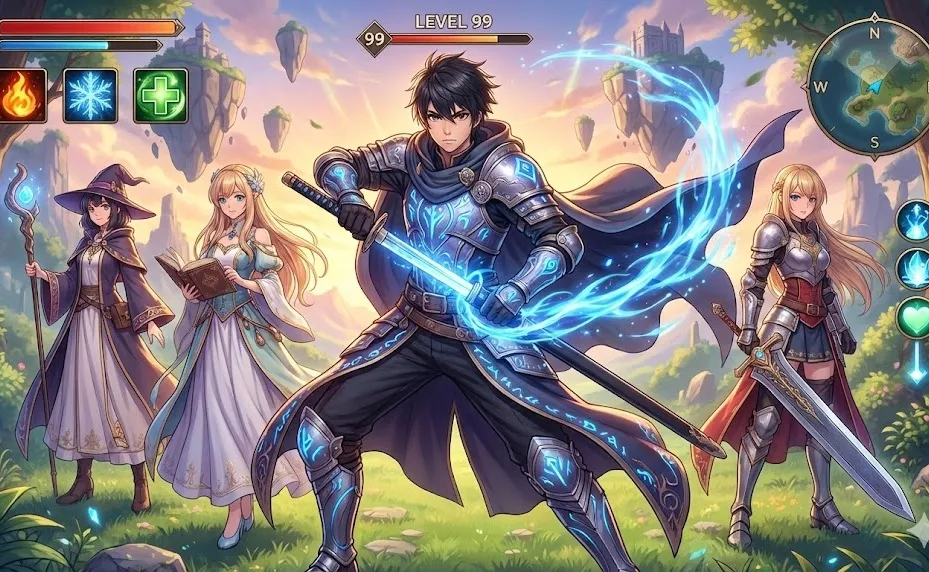
The setup is classic but effective. Our main character finds himself transported into a game he knows inside and out. But here is the kicker: he isn’t the hero. He isn’t the villain. He’s a side character—an extra—with high potential but a tragic backstory.
In the original game, this character was destined to be fodder. Just a stepping stone for the real protagonists.
But our MC isn’t having any of that. Armed with the knowledge of hidden items, optimized build paths, and future events, he decides to flip the script. He dedicates himself to the sword with a monk-like discipline.
This isn’t just about getting a “system” that hands him power. It’s about the grind. And watching that grind pay off is incredibly satisfying.
Why the Protagonist Stands Out
Most isekai protagonists are bland self-inserts. They are nice to everyone, accidentally get strong, and have girls fall into their lap for no reason.
The lead in I Became a Genius Swordsman in the Pretty Girl Game is different. He’s focused. He’s calculating.
He knows that the world he is in is dangerous. If he doesn’t get strong, he dies. This creates a sense of urgency that drives the plot forward. He isn’t training to look cool; he’s training to survive the calamities he knows are coming.
The “Genius” Aspect
The title isn’t lying. The MC has a talent for the sword, but the story does a great job of showing how he utilizes it.
- Tactical Combat: Fights aren’t just “I hit harder.” They involve spacing, timing, and using specific techniques to counter opponents.
- ** Ruthless Efficiency:** He doesn’t waste time on pointless drama unless it benefits his growth or protects his allies.
The “Pretty Girl Game” Elements: Navigating the Harem
Okay, let’s address the elephant in the room. The title says “Pretty Girl Game,” so yes, there are waifus.
However, the romance and social elements take a backseat to the action—and that is a good thing. Since the setting is a game academy, the MC has to interact with the original “Heroines.”
The tension comes from the fact that he is changing the plot. By becoming strong, he attracts attention he didn’t want.
- The Tsundere Rival: Wants to beat him.
- The Quiet Prodigy: Wants to learn from him.
- The Original Protagonist: Is confused why this random extra is suddenly god-tier.
The interactions feel organic rather than forced. He isn’t chasing them; they are drawn to his competence. It’s a refreshing change of pace from MCs who turn into blushing messes every time a girl speaks to them.
The Power System and Progression
If you are a fan of RPG mechanics, you’re going to love this.
I Became a Genius Swordsman in the Pretty Girl Game uses a very clear, satisfying progression system. It’s not just about leveling up; it’s about skill proficiency and “enlightenment.”
Here is a quick look at what makes the combat click:
| Element | Description | Why It Works |
|---|---|---|
| Skill Acquisition | MC hunts for hidden manuals. | Rewards the reader for knowing the lore. |
| Physical Limits | The body breaks if pushed too hard. | Adds stakes to the training montages. |
| Aura/Mana | Visual representation of power. | Makes the fight scenes vivid and hype. |
The author knows how to write a hype moment. When the MC finally unveils a move he’s been practicing for twenty chapters, the payoff is massive.
Is the Manga/Novel Worth Your Time?
There is a reason I Became a Genius Swordsman in the Pretty Girl Game is trending in the US. It scratches a very specific itch. It combines the “Zero to Hero” trope with a protagonist who feels like an actual gamer—someone trying to speedrun life efficiently.
The pacing is brisk. You rarely get stuck in boring political arcs for too long before swords start clashing again.
Who Should Read This?
- You loved Solo Leveling: But you want more sword techniques and less necromancy.
- You liked Reincarnation of the Suicidal Battle God: You enjoy regression/transmigration stories where the MC uses future knowledge.
- You hate whiny MCs: You want a protagonist who gets things done.
Final Verdict
If you can get past the mouthful of a title, you’re in for a ride.
I Became a Genius Swordsman in the Pretty Girl Game manages to stand out in a flooded market by executing the basics perfectly. The art (in the adaptation) is crisp, the fights are brutal, and the progression is addictive.
It doesn’t try to reinvent the wheel. It just puts high-performance tires on it and drives it at 100mph.






Leave a Reply