




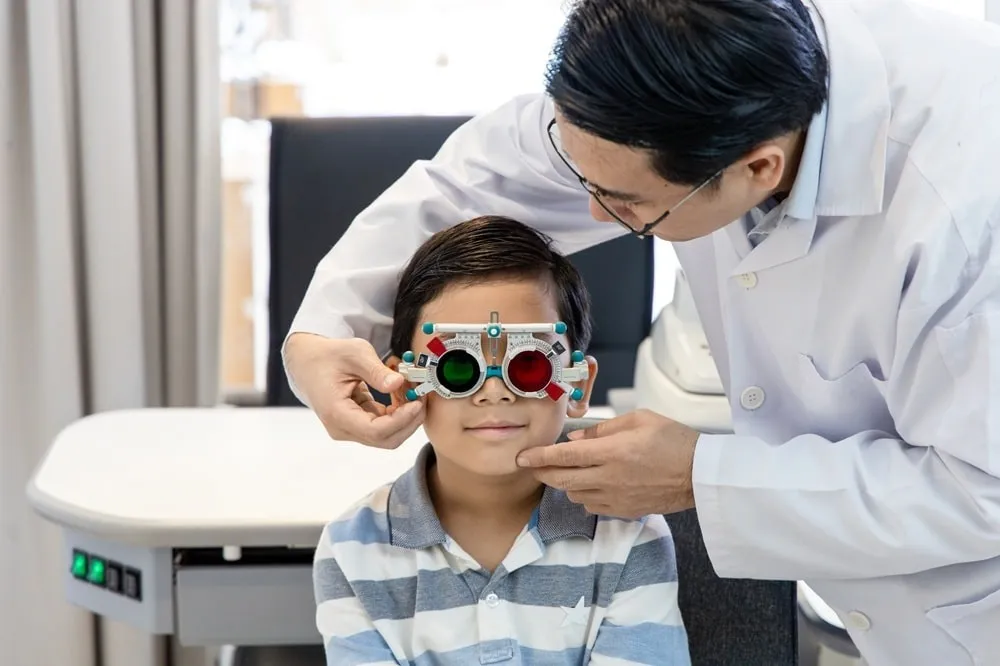
Myopia, commonly known as nearsightedness, has become more than just a minor vision inconvenience; it is a global health concern. With increased screen time and less outdoor activity, experts estimate that nearly half of the world’s population will be myopic by 2050. For the individual, this means struggling to see distant objects like road signs, classroom boards, or the television clearly.
However, the field of ophthalmology has advanced rapidly. In 2026, we no longer just “correct” myopia with a pair of glasses; we “manage” it through sophisticated treatments designed to stabilize vision and improve quality of life.
What is Myopia? A Medical Overview
Myopia is a refractive error that occurs when the eyeball grows too long or the cornea is too curved. Instead of light focusing directly on the retina, it focuses in front of it. This results in a sharp image for close-up tasks but a blurred one for anything in the distance.
High myopia (a severe form of the condition) is particularly concerning because it increases the long-term risk of secondary complications, such as retinal detachment, glaucoma, and macular degeneration.
Symptoms and Early Warning Signs
While blurred distance vision is the hallmark of myopia, other symptoms often go unnoticed:
-
Persistent squinting: An instinctive effort to improve focus.
-
Frequent headaches: Caused by eye strain and overworking the focusing muscles.
-
Difficulty driving at night: Glare and blurred signs can make nocturnal navigation hazardous.
-
Excessive eye rubbing: Especially common in children who are struggling to see clearly.
Modern Myopia Treatment Options
Today’s treatment landscape offers a spectrum of choices depending on the patient’s age, eye health, and lifestyle needs.
1. Corrective Lenses (Non-Surgical)
-
Prescription Eyeglasses: The simplest and most common method. Modern lenses now include “Myopia Control” designs for children that help slow down the elongation of the eyeball.
-
Contact Lenses: These provide a wider field of vision. Specialized Orthokeratology (Ortho-K) lenses are worn overnight to temporary reshape the cornea, allowing for clear vision during the day without any lenses.
2. Advanced Surgical Procedures
For adults with a stable prescription, surgery offers a permanent alternative to external correction:
-
LASIK & SMILE: These laser-based procedures reshape the corneal tissue to ensure light focuses correctly on the retina.
-
ICL (Implantable Collamer Lens): For patients with thin corneas or high myopia who may not qualify for LASIK, a micro-lens is inserted inside the eye, working like a permanent contact lens.
3. Pharmacological Management
Low-dose atropine eye drops have emerged as a leading treatment for children. When used daily, these drops have shown significant success in slowing the progression of myopia during the crucial growing years.
Why Early Diagnosis Matters
In children, myopia can progress rapidly as the eye grows. Early intervention is no longer just about seeing better today—it is about preventing “High Myopia” tomorrow. By implementing myopia control strategies early, doctors can reduce the risk of sight-threatening complications later in life. For adults, regular check-ups ensure that the prescription is accurate and the retina remains healthy under the stress of nearsightedness.
Choosing the Right Eye Specialist
Managing myopia requires a personalized approach. A standard eye exam is often not enough; a comprehensive evaluation involving axial length measurement (measuring the length of the eye) is the gold standard for modern management.
When seeking professional help, it is vital to consult with specialists who stay updated on the latest clinical trials and technology. If you or your child are experiencing vision changes, visiting a dedicated center for myopia treatment can provide access to a full range of diagnostic and therapeutic options, from pediatric control to adult refractive surgery.
FAQs
1. Can myopia be cured permanently? While myopia cannot be “cured” in the sense that the eye’s shape is reverted naturally, refractive surgeries like LASIK or ICL can permanently correct the vision so that you no longer require glasses or contacts.
2. At what age does myopia stop progressing? For most people, myopia stabilizes between the ages of 18 and 21. However, in some cases, it can continue to change into the mid-20s, which is why surgeons require a stable prescription before performing laser surgery.
3. Does screen time cause myopia? There is a strong correlation between “near work” (screens, reading) and the development of myopia. Doctors recommend the 20-20-20 rule: every 20 minutes, look at something 20 feet away for 20 seconds to reduce strain.
4. Is surgery safe for high myopia? Yes, but the choice of surgery changes. While LASIK has limits based on corneal thickness, ICL (Implantable Collamer Lens) is an excellent, safe, and highly effective option for those with very high prescriptions.
Conclusion
Myopia management has evolved from simple vision correction to a comprehensive science aimed at preserving long-term ocular health. Whether through the latest myopia-control lenses for a child or life-changing refractive surgery for an adult, clear vision is more accessible than ever before. Staying informed and seeking expert care early is the best way to protect your sight in an increasingly digital world.
Medical Disclaimer: This article is for informational purposes only and does not constitute medical advice. Treatment plans vary by individual; always consult with a qualified eye care professional for a diagnosis and personalized treatment plan.






Leave a Reply