




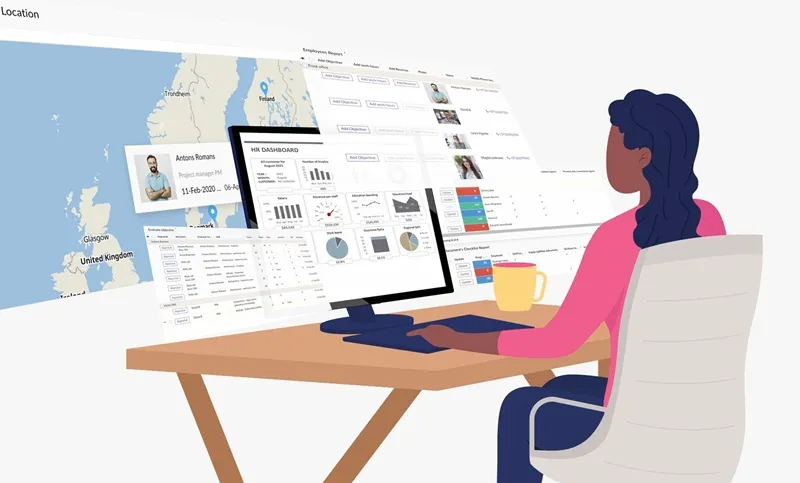
Let’s be real for a second. You probably have a killer business strategy. Your slide decks are polished, your quarterly goals are set, and your vision is clear.
So, why are you still missing targets?
Here is the hard truth: You don’t have a strategy problem. You have a people problem.
Most companies design strategies in a vacuum and then hope their existing teams can magically execute them. It’s like trying to win a Formula 1 race with a rally car driver—great talent, wrong application. This is exactly where talent optimization software enters the chat.
It’s not just HR jargon. It is the missing link between what you want to achieve and who you have to achieve it.
The Core Problem: The Strategy-Talent Gap
We see it all the time in the Indian market and globally. Companies spend millions on digital transformation and strategy consulting, but zero on aligning their workforce to those changes.
This creates a massive disconnect. You have employees who are disengaged because they’re in the wrong roles, and you have managers hiring based on “gut feeling” rather than data.
Key Takeaways:
-
Strategy Alignment: Talent optimization ensures your people strategy matches your business goals.
-
Data Over Guesswork: Move away from subjective hiring to predictive analytics.
-
Retention: Employees stay when their skills are utilized correctly.
-
Efficiency: Reduce the time spent on mismatched teams and failed projects.
What Actually Is Talent Optimization Software?
Think of it as a GPS for your workforce.
Traditional HR software (HRIS) is a filing cabinet—it stores payroll, attendance, and basic info. Talent optimization software, like ProFinda, is an intelligence engine. It maps the skills, behaviors, and aspirations of your workforce against the work that needs to be done.
It answers the questions that keep CEOs awake at night:
-
Do we have the internal skills to launch this new product?
-
Who is the best person to lead our expansion into a new market?
-
Why is our sales team burning out?
The Four Pillars of Talent Optimization
To really get this right, you need to look at four specific areas. Good software will handle all of them.
-
Diagnose: Look at your current people data. Is your culture healthy? Are teams communicating?
-
Design: Create the organizational structure necessary to hit your goals.
-
Hire: Use predictive assessments to hire candidates who fit the role and the culture.
-
Inspire: Give managers the insights they need to motivate their specific team members.
Why ProFinda is a Game Changer
There are plenty of tools out there, but let’s talk about why platforms like ProFinda are leading the pack.
Most systems rely on what employees tell you. They fill out a profile, list a few skills, and that’s it. But people are terrible at self-assessment. They forget skills, or they underestimate what they know.
ProFinda uses AI to build a dynamic skills ontology. It scans work outputs and internal data to find the actual skills your people possess. It finds the expert in Python coding who works in your finance department. It finds the fluent French speaker hiding in customer support.
It unlocks the “total workforce,” including full-time employees, freelancers, and alumni.
Comparison: Traditional HR vs. Talent Optimization
| Feature | Traditional HRIS | Talent Optimization Software |
|---|---|---|
| Primary Goal | Record keeping & Compliance | Business Strategy Alignment |
| Data Source | Static forms | Dynamic AI & work outputs |
| Hiring | Resume screening | Behavioral & Cognitive fit |
| Team Building | Based on availability | Based on complementary skills |
| ROI Focus | Administrative efficiency | Revenue & Productivity growth |
How to Choose the Right Tool for Your Business
Ready to invest? Don’t just buy the first tool you see on Google.
If you are a startup in Bangalore or a conglomerate in Mumbai, your needs will differ, but the criteria remain the same.
1. Integration Capability
Does it talk to your existing stack? If it doesn’t integrate with Slack, Microsoft Teams, or your ATS (Applicant Tracking System), nobody is going to use it. It needs to be part of the workflow, not an extra chore.
2. The User Experience
If it looks like it was built in 1995, your employees will revolt. The interface needs to be intuitive.
3. Predictive Analytics
Does the software tell you what happened (descriptive) or what will happen (predictive)? You want to know a team is going to fail before the project starts, not after.
Frequently Asked Questions (FAQ)
1. Is talent optimization software only for large enterprises?
Not at all. While enterprises use it to manage thousands of employees, SMBs (Small to Medium Businesses) actually see faster results. When you have a team of 50, one bad hire or one misaligned team can tank your year. The stakes are higher for smaller players.
2. How does this differ from an Applicant Tracking System (ATS)?
An ATS is about logistics—collecting resumes and scheduling interviews. Talent optimization is about quality. It helps you define exactly what the job requires behaviorally and cognitively before you even write the job description.
3. Can AI really measure “soft skills”?
Yes, and often better than humans. Humans have biases. We hire people we “click” with. Software analyzes behavioral patterns and cognitive assessment data to predict how a person communicates, leads, and handles pressure.
Final Thoughts: Stop Leaving Talent on the Table
Your competitors are already moving away from resume-based hiring and gut-feeling management. They are using data to build “dream teams” that execute strategy flawlessly.
You have the people. You have the vision. You just need the bridge to connect them.
Talent optimization software isn’t just a nice-to-have upgrade for HR. It is a critical business survival tool. If you want to unlock the hidden potential in your organization, it’s time to look deeper than a LinkedIn profile.


Leave a Reply