


Paraphimosis is a condition where a dog’s penis slips out of the sheath and cannot go back inside. It can look frightening and painful. Many pet owners feel helpless when they first see it. Knowing how to fix paraphimosis in dogs at home can provide quick relief before you reach the vet. But home care is never a full cure. A veterinary check is always needed to prevent damage and future problems.
What is Paraphimosis?
Paraphimosis happens when the penis does not return to its normal position inside the sheath. The longer it stays out, the worse the swelling becomes. Blood flow gets restricted, and the tissue becomes tight and sore. Don’t ignore it, the sheath may even dry out or die.
Dogs relieve discomfort by licking the affected area. Some may whine or show signs of restlessness. Owners usually notice it after play, mating, or grooming. Paraphimosis looks urgent because it is. Quick action is important.
Why Does it Happen?
There are many causes. Sometimes, you might not know, but long hair around the penis can also trap the sheath. Trimming the fur prevents this. In other cases, trauma from rough play or minor injury causes swelling. Mating or arousal can also lead to paraphimosis if the penis does not retract naturally.
Infections or inflammation around the sheath are another reason. Rarely, birth defects make some dogs more prone to the problem. Whatever the reason, once the penis is stuck, swelling makes it harder to go back in. It is also very painful for the dog.
First Aid at Home
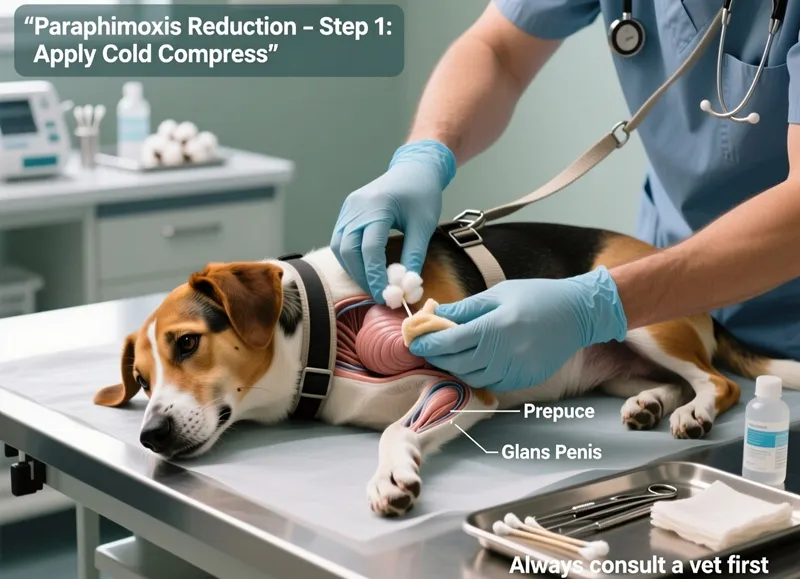
Pet owners can try simple steps before getting to the vet. Stay calm and gentle with the dog, as he may already be in pain. Start by cleaning the area with warm water to remove dirt or dried discharge. Apply a water-based lubricant like KY jelly or plain petroleum jelly to reduce friction and help the penis slide back inside.
A cold compress can also help. Wrap ice in a cloth and hold it gently against the area to reduce swelling and make retraction easier. In some cases, sugar water or granulated sugar applied with gauze helps shrink the swollen tissue. If the penis retracts, watch the dog closely, keep the area clean, and prevent him from licking. But even if things look fine, a vet visit is still needed.
When to See the Vet
Do not delay vet care. Even if it looks better, paraphimosis can return. The vet checks for infection, trauma, or anatomy issues. Treatment may include hair trimming, medicines, or surgery. If tissue damage starts, only urgent care can help. The rule is simple: if the penis stays out for 30 minutes or looks swollen and dark, go to the vet right away. You should not delay the cure at all. If it is delayed, the dog may suffer from even worse problems. You need to get to a vet as soon as possible in this case.
Preventing Paraphimosis
Any prevention is much better than a cure. Regular grooming helps a lot. The hair around the sheath must be trimmed again and again. Wash the area gently if there is discharge or dirt.
- Check your dog after mating, play, or exercise. At times, the dog doesn’t even notice that the penis is out. A quick check prevents swelling from setting in.
- Avoid rough handling. Teach children and others in the home not to touch or play roughly with sensitive areas.
Finally, schedule regular vet visits. Your vet can catch infections, inflammation, or small problems before they turn into bigger ones. Dogs prone to paraphimosis may need preventive surgery if the problem repeats often.
Living With a Dog Prone to Paraphimosis
Some dogs are more prone to paraphimosis than others. Owners of such dogs should be prepared. Keep lubricant at home. Know how to clean the area quickly. Act fast at the first sign of trouble.
Monitor your dog’s behaviour. Check the sheath once if your dog is whining or licking a lot. Make sure he can urinate normally. A blocked penis is a medical emergency.
Most importantly, do not rely only on home fixes. These steps are temporary. Veterinary care is the only way to make sure your dog stays safe and healthy long term.
Paraphimosis may look shocking, but with quick action, most dogs recover well. Simple first-aid steps like cleaning, lubricating, and applying cold compresses can give relief. But these are only short-term solutions.
A vet is always needed to treat the cause and prevent damage. Regular care, grooming, and attention to your dog’s comfort go a long way in preventing problems. With fast action and proper treatment, your dog can stay safe, happy, and healthy.





Leave a Reply