




We have all been there. You walk into your living room, look around, and feel… absolutely nothing.
Maybe the walls feel a little too bare, or that beige sofa you bought five years ago is starting to look less “neutral chic” and more just “tired.” The itch to change things up is real, but then you look at your bank account and the prices of modern furniture, and the inspiration instantly vanishes.
Here is the good news: you don’t need a renovation budget to make your house feel like a home. In fact, some of the most stylish homes aren’t the ones with the most expensive catalogs; they are the ones with the most creativity.
Refreshing your space is often less about buying new things and more about reimagining what you already have. With a little elbow grease and the right home decor strategy, you can completely shift the vibe of a room over a single weekend.
Let’s look at some approachable, high-impact ways to breathe new life into your space without draining your savings.
The Magic of Paint (It’s Not Just for Walls)
When people think of refreshing a room, they immediately assume they have to paint all four walls. That is a huge undertaking. It involves moving heavy furniture, taping off trim, and inevitable back pain.
Instead, look smaller. Paint is the cheapest design tool you have, and it works wonders on furniture and accents.
Do you have a generic laminate dresser or a nightstand that has seen better days? A fresh coat of matte black, sage green, or deep navy can make a cheap piece of furniture look custom-made.
If you want to try one of the best diy home decor ideas trending right now, look into “color drenching” on a small scale. This implies painting a piece of furniture the exact same color as the wall behind it. It creates a seamless, built-in look that instantly makes a room feel more expensive and intentional.
Don’t forget spray paint. It is essentially a magic wand for old accessories. You can take a mismatched collection of thrift store picture frames, spray them all a cohesive gold or matte white, and suddenly you have a unified gallery wall.
Swap the Soft Goods
If your room feels stiff or uninviting, the problem usually isn’t the architecture. It’s the textiles.
Soft goods—pillows, throw blankets, curtains, and rugs—are the “jewelry” of a room. They are also the easiest things to swap out as seasons or your tastes change.
Many people make the mistake of buying cheap, poly-fill throw pillows that go flat in a week. Instead of buying whole new pillows, invest in high-quality down or down-alternative inserts just once. Then, you only ever need to buy pillow covers.
You can find affordable, textured pillow covers on Etsy or Amazon for a fraction of the price of a full pillow. Look for linen, velvet, or nubby boucle fabrics. Mixing textures is the secret sauce here. If your sofa is smooth leather, add a chunky knit throw. If your sofa is a woven fabric, try a smooth velvet pillow.
This layering creates depth. It tricks the eye into thinking the room was professionally styled. It’s a simple home decor hack that changes the tactile experience of the room, making it cozier and more welcoming.
Lighting: The Mood Maker
You can have the most beautiful furniture in the world, but if your lighting is bad, the room will look terrible.
A lot of rentals and builder-grade homes come with what designers affectionately call “boob lights”—those flush-mount dome fixtures that cast a harsh, interrogation-room glare.
Swapping out a light fixture is actually one of the easier DIY tasks you can learn (always turn the breaker off first!), but if you aren’t comfortable with electrical work, you still have options.
Focus on “layered lighting.” This means relying less on the big overhead light and more on lamps. Floor lamps, table lamps, and even plug-in wall sconces allow you to control the mood.
For a true budget hack, look at the color temperature of your lightbulbs. If your room feels sterile, check your bulbs. You might be using “Daylight” (5000K) bulbs, which are blue and cold. Swap them for “Warm White” (2700K or 3000K).
This single switch costs less than $20 for the whole room and immediately makes your home decor ideas shine. Everything looks better in warm light.
Bring the Outdoors In
There is a biological reason we feel calmer in nature, and bringing that element inside is a design necessity. Plants add life, sculptural shape, and a pop of color that goes with literally every design style.
If you have a black thumb, don’t worry. You don’t need a high-maintenance Fiddle Leaf Fig that will drop all its leaves if you look at it wrong. Snake plants and Pothos are incredibly resilient and forgiving.
For a fun weekend project, head to a local nursery or hardware store. Don’t buy the expensive ceramic pots there. Buy the cheap plastic nursery pots and the terracotta saucers.
You can then use a technique called the “trash-to-terracotta” hack. Mix baking powder into acrylic paint to create a textured, ceramic-like finish, and paint those cheap pots. It gives you that high-end, earthy artisan look for pennies.
Even a vase of clipped branches from your backyard can act as a stunning centerpiece. It’s free, sculptural, and changes with the seasons.
Curating Walls with Personality
Blank walls can feel daunting. Large-scale art is notoriously expensive, which leads many people to leave their walls empty for years.
However, a gallery wall allows you to cover a large space without a single expensive piece. The trick to a gallery wall that looks “designed” rather than “cluttered” is cohesion. This could be consistent spacing, matching frames, or a similar color palette across the art.
This is where your diy home decor ideas can really run wild. You don’t need to buy prints.
- Frame fabric: Have a scarf you love but never wear? Frame it.
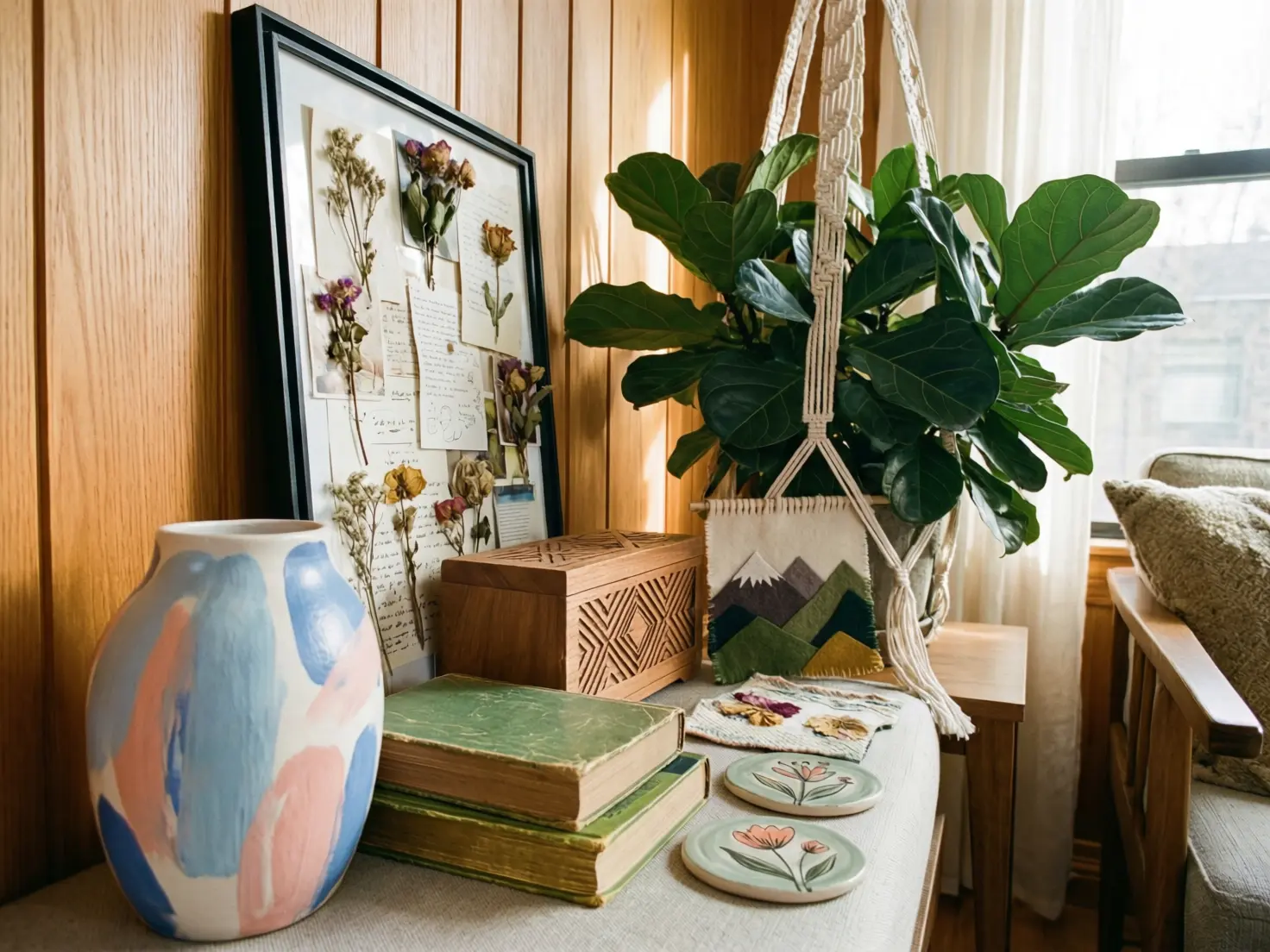
- Pressed botanicals: Press flowers or ferns from a meaningful walk and frame them floating between two pieces of glass.
- Digital downloads: Many artists sell high-resolution digital files for a few dollars. You can have them printed at your local office supply store on cardstock for next to nothing.
This approach tells a story. When guests ask about the art, you aren’t just saying, “I bought it at a big box store.” You’re telling them about the day you found that fern, or the fabric you picked up on a trip.
Upgrade Your Hardware
If you are renting, you might feel stuck with the landlord’s choices, especially in the kitchen and bathroom. But hardware—cabinet knobs, drawer pulls, and door handles—is usually not permanent.
Standard builder-grade knobs are often plain chrome or brushed nickel. Swapping them out for matte black, unlacquered brass, or even vintage ceramic knobs can completely change the personality of a room.
It’s a low-risk, high-reward project. Just keep the old screws and knobs in a Ziploc bag taped inside one of the cabinets. When it’s time to move out, spend an hour swapping them back.
For furniture, this works even better. A generic IKEA dresser looks infinitely more expensive with heavy, unique brass pulls. It adds weight and character to mass-produced items.
The Power of Rug Layering
Area rugs can be budget-busters. Large rugs (8×10 or larger) can cost hundreds or thousands of dollars. Because of this, many people buy a rug that is too small for their room, which makes the space feel disjointed and cheap.
A great workaround is layering. Buy a large, inexpensive natural fiber rug, like jute or sisal. These are durable and neutral, acting as a base layer to cover the floor.
Then, place a smaller, vintage, or patterned rug on top. You get the coverage you need for the room to feel grounded, but you only have to pay for the smaller, more expensive decorative rug.
This adds texture and visual interest, and it’s a classic move used by interior designers to make a room feel cozy and collected.
Start Small, Start Now
Improving your home doesn’t require a dumpster in the driveway or a contractor on speed dial. It’s about the small, intentional choices you make to reflect who you are.
Whether it’s painting a lamp base, swapping out a rug, or finally hanging that gallery wall, the goal is to create a space that makes you happy when you walk through the door.
Pick one corner this weekend. Just one. Apply one of these ideas, and see how it changes the energy of the space. You might be surprised at how little it takes to make a big difference.
Frequently Asked Questions
How can I decorate my home on a tight budget?
Focus on high-impact changes that cost very little. Paint is the number one tool for this—painting an accent wall or a piece of furniture changes the look instantly. Beyond that, decluttering costs nothing and often makes a room feel larger and more intentional. Shopping your own home (moving decor from one room to another) is also a great way to refresh a space for free.
What are the best DIY projects for beginners?
If you aren’t handy with power tools, start with “soft” DIYs. This includes things like spray painting picture frames, changing out cabinet hardware (which usually just requires a screwdriver), or creating a gallery wall. Swapping out light fixtures or building furniture from scratch can come later once you build up your confidence.
How do I make my rental feel like home without losing my deposit?
Avoid anything permanent. Peel-and-stick wallpaper is a lifesaver for renters who hate their wall color. Swapping out light fixtures and cabinet hardware is allowed in most leases as long as you put the originals back before you leave. Also, never underestimate the power of large area rugs to cover up flooring you don’t like.
Does DIY home decor actually look expensive?
It absolutely can if you focus on materials and finish. The “cheap” look usually comes from rushing or using poor-quality finishes. Take your time sanding before you paint. Use matte finishes rather than high-gloss (which highlights imperfections). Simple upgrades like adding new legs to a sofa or using “rub ‘n buff” on metal accents can make budget items look high-end.





Leave a Reply