




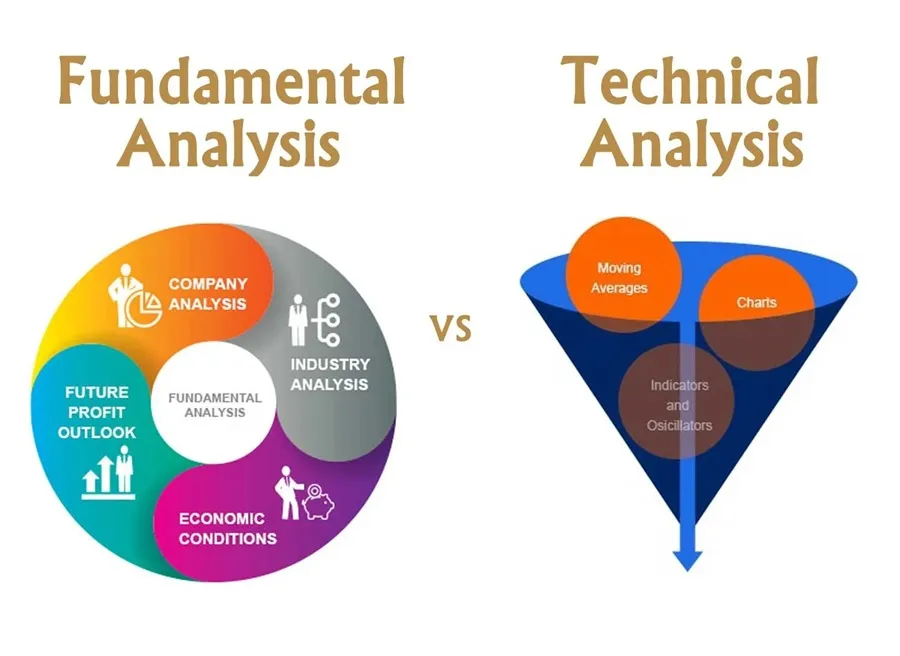
When you first step into the world of investing, it feels like entering a room where two different languages are being spoken. On one side, you have the “Fundamentals” crowd—investors who pore over balance sheets, management quality, and economic moats. On the other side, you have the “Technicals” crowd—traders who live and breathe price charts, volume trends, and moving averages.
If you’re trying to grow your wealth, you shouldn’t feel forced to choose a side. In fact, the most successful market participants often use a blend of both. Understanding the difference between fundamental analysis and technical analysis is the first step toward building a robust investment strategy.
What is Fundamental Analysis?
Fundamental analysis is the art of evaluating a security by attempting to measure its intrinsic value. Think of it as looking under the hood of a car before you buy it. You aren’t just looking at the paint job; you want to know if the engine is solid, how much mileage it has, and if the manufacturer is reputable.
The Core Pillars of Fundamentals:
-
Financial Statements: Analyzing the Balance Sheet, Income Statement, and Cash Flow.
-
Earnings Growth: Is the company making more money than it did last year?
-
Management Quality: Who is steering the ship? Do they have a track record of integrity?
-
Economic Moats: Does the company have a competitive advantage (like Brand Power or Patents) that protects it from rivals?
For a fundamental investor, if the “intrinsic value” is higher than the current stock price, the stock is considered “undervalued,” making it a “Buy.”
What is Technical Analysis?
Technical analysis takes a completely different route. It ignores the company’s business model and focuses entirely on price action and volume. Technical analysts believe that all known information about a company—its earnings, its management, its future—is already “baked into” the price.
Instead of asking why a stock is moving, they ask how it is moving.
The Tools of the Trade:
-
-
Chart Patterns: Head and Shoulders, Double Bottoms, and Cup and Handle patterns.
-
Indicators: Relative Strength Index (RSI), MACD, and Bollinger Bands.
-
Support & Resistance: Identifying price levels where a stock historically struggles to fall below or rise above.
-
The Key Difference Between Fundamental Analysis and Technical Analysis
To simplify your strategy, it helps to see these two approaches side-by-side.
| Feature | Fundamental Analysis | Technical Analysis |
| Primary Goal | Determine Intrinsic Value | Predict Price Movement |
| Data Source | Financial Reports & Economic Data | Charts & Market Statistics |
| Time Horizon | Long-term (Years) | Short to Medium-term (Days/Weeks) |
| Core Question | What should this be worth? | Where is the price going next? |
| Concept | Buy and Hold | Timing the Market |
While the difference between fundamental analysis and technical analysis is stark, they aren’t mutually exclusive. Fundamentals tell you what to buy; technicals tell you when to buy it.
How Investors Use Both (The “Technimental” Approach)
Many modern investors use a hybrid strategy often called “Technimental” analysis. Here is how you can apply both to your portfolio:
1. Filtering with Fundamentals
Start by using fundamental analysis to create a “watchlist” of high-quality companies. You look for low debt, consistent profit margins, and strong leadership. This ensures you aren’t “gambling” on a junk stock that might go to zero.
2. Entry and Exit with Technicals
Once you have your list of great companies, you don’t just buy blindly. You look at the charts. Is the stock currently overbought (RSI > 70)? Or is it sitting at a historical support level? By using technicals, you avoid buying a great company at a temporary price peak.
3. Risk Management
Technicals provide clear “Exit” points. If a fundamentally strong company sees its stock price break below a major long-term moving average, it might signal that something is wrong behind the scenes that hasn’t shown up in the earnings reports yet.
Which One is Right for You?
Your choice depends heavily on your goals and your temperament.
-
Choose Fundamental Analysis if: You have a long-term mindset (5+ years), you enjoy reading business news, and you have the patience to ignore daily price fluctuations.
-
Choose Technical Analysis if: You enjoy the thrill of active trading, you are disciplined with “Stop Loss” orders, and you prefer visual patterns over reading 100-page annual reports.
Final Thoughts
Mastering the difference between fundamental analysis and technical analysis is like learning to use both eyes. Fundamental analysis gives you depth and context, while technical analysis gives you focus and timing. By combining the two, you protect yourself from low-quality businesses while ensuring you don’t enter the right trade at the wrong time.
The market is a complex beast. Don’t limit your toolkit. Use the fundamentals to find your “Value” and the technicals to find your “Velocity.”
Frequently Asked Questions (FAQs)
1. Can a beginner start with both?
Absolutely. Most beginners find fundamentals easier to grasp because it relates to real-world business, but learning basic support and resistance lines can prevent many “rookie” mistakes.
2. Is technical analysis just gambling?
No. While it involves probability, it is based on human psychology. Humans tend to react to price levels in predictable ways, which creates the patterns technical analysts study.
3. Which is more reliable for the Indian stock market?
In volatile markets like India, fundamentals are crucial for long-term wealth (wealth creation), while technicals are widely used by retail traders for short-term gains (income generation).





Leave a Reply