




Exhaust problems are a big headache for many people. And one big concern is the cost to fix exhaust leak. If you don’t know what to expect, it can be frustrating. However, learning the basics helps you plan better and avoid stress.
Why Exhaust Leaks Matter
The exhaust carries engine gases out of the vehicle. It is of great importance to the car. You need to keep it in top shape. If it leaks, gases may escape. This is unsafe for you and your passengers. It also reduces fuel efficiency and engine performance. Moreover, leaks make the car sound louder than normal. Driving with one is risky and often costly if left too long.
Common Causes of Exhaust Leaks
Several issues can cause exhaust leaks. Rust is one of the biggest culprits. Moisture and road salt eat away at pipes over time. Cracked manifolds or broken gaskets are another reason. Sometimes, a loose connection between parts leads to leaks. Damage from road debris can also create holes in the system. You have to be very careful about exhaust leaks.
Signs of an Exhaust Leak
Pay attention and you can spot a leak. The most common sign is a louder engine. You might also smell strong fumes inside or outside the car. Also, all these symptoms hint at a deeper problem. Never ignore one when you find it. Sometimes, you feel a vibration under the pedals or steering wheel. Reduced fuel economy is another clue that something is wrong. Call the mechanic the moment you sniff something wrong. Or fix it yourself if you can.
How Mechanics Diagnose the Problem
Mechanics will go over the pipe first and foremost. They may check the manifold, gaskets, and pipes. However, get a smoke test to find the escape point for gases. At times, mechanics use a stethoscope tool to listen for leaks. Identifying the exact spot is crucial before deciding on the repair. Depending on the issue, it may take some time. You need to stay patient.
Repair Options
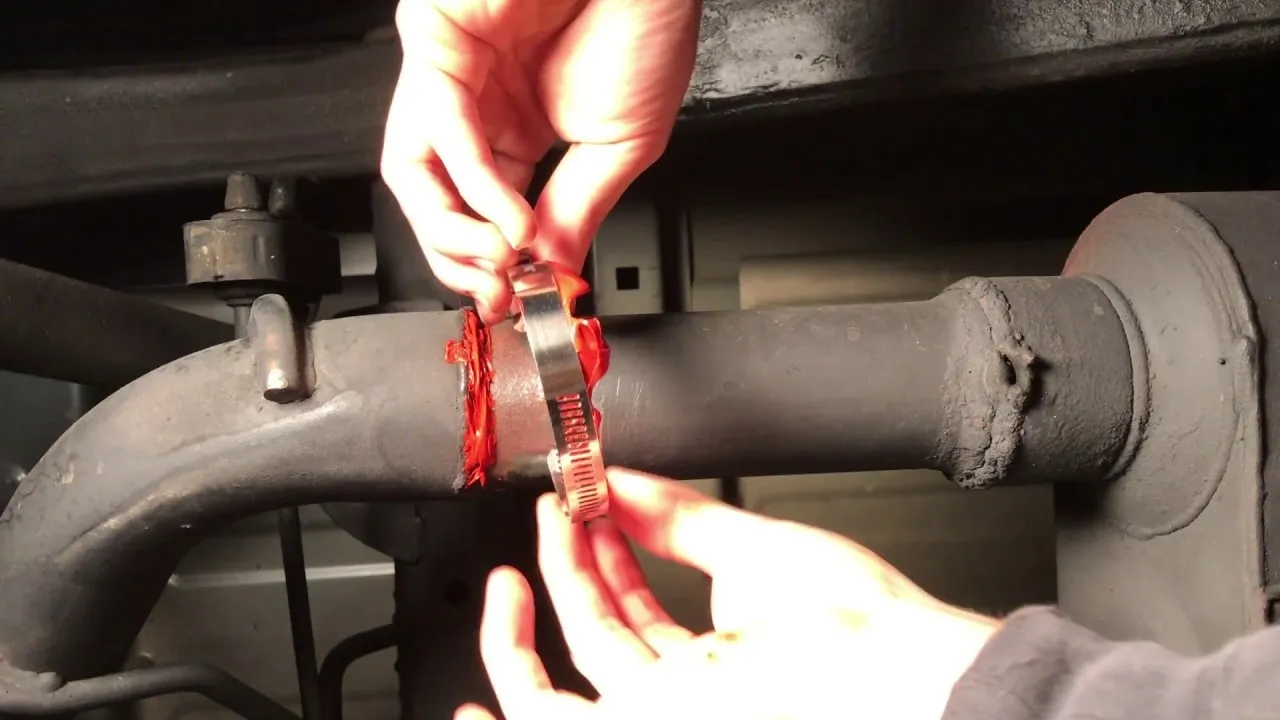
The repair depends on the damage. Small holes can be patched with special sealants or clamps. You need to replace the pipe at most if it’s a medium problem. Bigger cracks or rusted areas usually need new parts. In severe cases, the entire exhaust system may need replacement. There are many repair options. You need to choose one according to the budget. Of course, it depends on how big the problem is.
Cost Factors
The price varies based on several things. Labor costs depend on the shop and region. The type of vehicle also plays a big role. Luxury cars or imports often cost more to fix. The location of the leak matters too. A simple gasket replacement is cheaper than replacing a catalytic converter. If you plan beforehand, you can cut a lot of costs. It stops burning a hole in your pocket.
Average Repair Costs
On the lower end, minor fixes may cost under a hundred dollars. Mid-range repairs, like replacing a pipe, usually cost a few hundred dollars. Bigger jobs involving catalytic converters or mufflers can reach into the thousands. Every leak is different, hence the range. This is just a general idea. You can calculate your costs with a professional. But it should not prevent you from making further repairs.
DIY vs Professional Repair
Some people try fixing small leaks at home. Clamp kits and sealants are available in stores. However, these are often temporary fixes. Moreover, mistakes can make the problem worse. Professional repair ensures the leak is handled safely and properly. Exhaust fumes are dangerous, so expert work is always safer. You don’t have to do everything yourself. A professional has the right toolset as well as the patience required.
Preventing Future Leaks
Prevention saves money and hassle. Wash your car’s underside if you live in snowy or salty areas. Moisture and salt speed up rust. Regular inspections catch small issues before they spread. Also, avoid hitting curbs or road debris, which can damage pipes. Taking care of your car keeps the exhaust in good shape.
Why Acting Early Matters
A minor leak can quickly grow into a serious issue. And ignoring it risks safety and higher repair bills. Acting early means you spend less and keep your car reliable. Moreover, it helps your vehicle pass emissions tests without issue.
Final Thoughts
Exhaust leaks happen often, but they can be handled with proper care. Knowing what causes them, spotting signs early, and understanding costs will help you stay prepared. And if you act quickly, you’ll save money and protect your safety on the road.






Leave a Reply