





Behavioral therapy techniques are powerful tools for personal change. They focus on altering unhealthy behaviors through structured methods. These techniques are widely used in mental health therapy to address various issues.
Cognitive therapy, a popular form, targets negative thought patterns. It helps individuals reframe their thinking to improve mental well-being. Exposure therapy, another technique, assists people in confronting and overcoming fears.
Dialectical Behavior Therapy (DBT) combines behavioral methods with mindfulness. It is effective for emotional regulation and stress management. Positive reinforcement encourages desired behaviors, making it a key component in many therapeutic approaches.
Behavioral therapy is versatile and adaptable. It can be tailored to suit individual needs, making it suitable for diverse populations. Whether you’re a mental health professional or someone seeking personal growth, these techniques offer valuable insights and strategies for change.
Understanding Behavioral Therapy
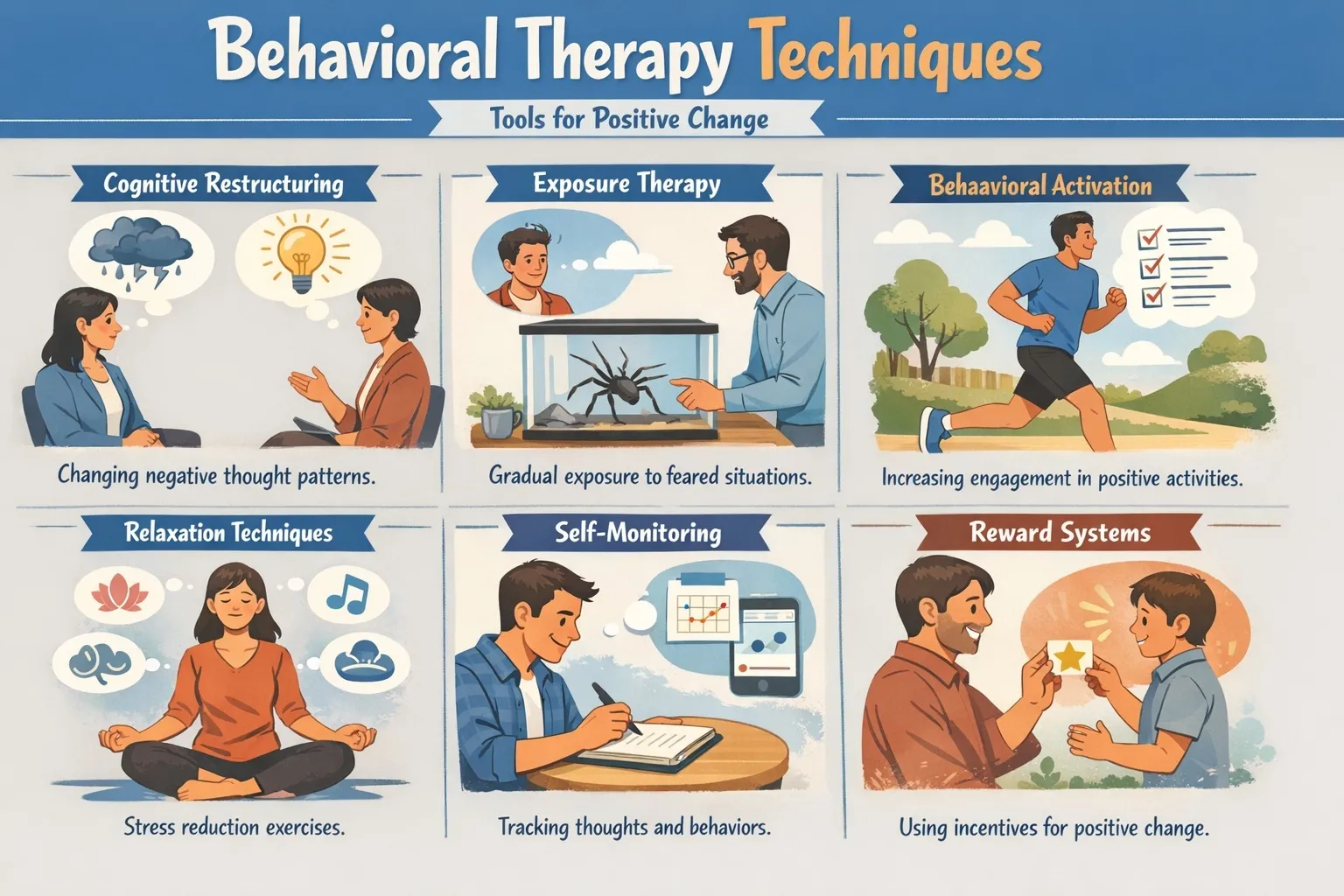
Behavioral therapy is centered on the principle that behavior can be learned and unlearned. The approach focuses on observable behaviors, examining how these can be modified. This makes it an action-oriented type of mental health therapy.
These techniques are evidence-based, with solid research supporting their effectiveness. They aim to address current issues, emphasizing the present rather than past events. This ensures that solutions are practical and applicable in real time.
Key characteristics of behavioral therapy include:
- Goal-oriented processes focusing on specific outcomes.
- Structured sessions with clear objectives.
- Practical exercises that promote skill development.
- Homework assignments for skill reinforcement outside therapy sessions.
This structured approach equips individuals with tools to manage and change behaviors effectively.
Core Behavioral Therapy Techniques
Behavioral therapy encompasses a variety of techniques aimed at changing unhealthy behaviors. These techniques focus on altering thought patterns, emotional responses, and behavioral habits. Different strategies are applied based on individual needs and goals.
Some widely used behavioral therapy techniques include:
- Cognitive Behavioral Therapy (CBT)
- Exposure Therapy
- Dialectical Behavior Therapy (DBT)
- Positive Reinforcement and Token Economies
- Systematic Desensitization
Each technique has unique features that address specific mental health challenges. They are designed to help individuals develop healthier coping strategies. Therapists work collaboratively with clients to ensure these techniques are effective and meaningful.
The effectiveness of these techniques is well-documented, making them popular in mental health therapy. Behavioral therapy offers flexibility, allowing techniques to be tailored for various settings and populations. Understanding and applying these techniques can lead to profound personal growth and improved mental health.
Cognitive Behavioral Therapy (CBT)
Cognitive Behavioral Therapy (CBT) is a cornerstone of behavioral therapy. It addresses negative thought patterns and the impact they have on feelings and behaviors. By understanding and restructuring these thoughts, individuals can improve their emotional and mental state.
CBT involves several key components:
- Identifying negative thoughts
- Challenging cognitive distortions
- Developing healthier thinking patterns
- Practicing new skills in real-life scenarios
CBT is structured and often involves homework assignments. These help individuals practice the strategies learned during sessions. Through CBT, clients gain skills to manage anxiety, depression, and other common mental health issues.
Exposure Therapy
Exposure therapy is designed to help individuals confront and overcome their fears. This technique involves gradual exposure to anxiety-inducing situations. By doing so, the individual’s sensitivity to these fears decreases over time.
Exposure therapy is systematic and involves careful planning. It is commonly used for phobias and PTSD. The approach helps build confidence and reduces fear’s hold on a person’s life. Over time, it promotes resilience and emotional strength.
Dialectical Behavior Therapy (DBT)
Dialectical Behavior Therapy (DBT) combines behavioral techniques with mindfulness practices. This method aims to balance acceptance and change, addressing emotional regulation and interpersonal skills.
Components of DBT often include:
- Mindfulness exercises
- Emotional regulation skills
- Distress tolerance strategies
- Interpersonal effectiveness techniques
DBT is particularly effective for individuals with borderline personality disorder. It also helps individuals cope with extreme emotions and improve relationships. By fostering mindfulness, DBT promotes presence and acceptance in the moment.
Positive Reinforcement and Token Economies
Positive reinforcement encourages desired behaviors by offering rewards. Token economies use tokens as tangible rewards that can be exchanged for privileges or items. Both techniques are effective in shaping behavior over time.
Common elements include:
- Setting clear goals
- Defining rewards and tokens
- Consistent application of the system
These methods are often used in educational and clinical settings. They are particularly effective with children, encouraging positive behaviors while motivating change.
Systematic Desensitization
Systematic desensitization helps individuals gradually face anxiety-inducing situations. It combines relaxation techniques with gradual exposure, reducing anxiety responses.
This approach is effective for treating specific phobias. It allows individuals to replace fear responses with calmness. Over time, this method builds confidence and reduces overall anxiety.
Applying Behavioral Therapy Techniques in Daily Life
Integrating behavioral therapy techniques into daily routines can significantly enhance mental well-being. These techniques provide practical tools for managing stress and developing healthy habits.
Behavioral strategies can be applied outside therapy sessions to reinforce positive changes. They help individuals gain control and navigate life’s challenges more effectively.
Practical applications of these techniques include:
- Setting daily goals and tracking progress
- Implementing relaxation exercises and mindfulness practices
- Utilizing positive reinforcement to encourage desired behaviors
Consistent practice helps reinforce these strategies, empowering individuals to maintain long-term change. These techniques become second nature, enabling people to lead more balanced and fulfilling lives.
Benefits and Limitations of Behavioral Therapy
Behavioral therapy offers numerous benefits, such as providing clear strategies for change and improving mental health. It is effective for a range of issues, including anxiety and depression.
However, there are limitations to consider. Some individuals may find structured approaches challenging.
Key considerations include:
- Effectiveness varies based on individual needs
- Requires commitment and consistency
- May not address underlying psychological issues
Despite limitations, many find behavioral therapy transformative, offering valuable tools for personal growth.
Getting Started with Behavioral Therapy
Beginning behavioral therapy involves finding a qualified therapist suited to your specific needs. Research therapists’ approaches and areas of expertise.
Consider the following steps to get started:
- Identify therapy goals
- Schedule an initial consultation
- Discuss therapy options and techniques
Starting with small steps can lead to meaningful, lasting change. Don’t hesitate to reach out for the support you need.
Conclusion: Embracing Change Through Behavioral Therapy
Behavioral therapy offers effective techniques to foster personal growth and manage mental health challenges. By focusing on the present and working towards achievable goals, individuals can make substantial changes in their lives.
Embrace these therapeutic techniques as tools for positive transformation. With commitment and the right support, enduring change is within reach. Take the first step today.






Leave a Reply