




When you click a button to complete an online payment to a non-profit, a quiet question often lingers in your mind: “Where exactly does my money go?”
It’s a fair question. In a world full of ambiguous charitable appeals, donors deserve absolute transparency. You need to know how your hard-earned financial resources are being transformed into actual, real-world solutions.
When you make financial donations to Child Rights and You (CRY) India, your money doesn’t get swallowed up by endless administrative loops. Instead, it enters a highly efficient “Multiplier Model” designed to create lasting, structural change. Let’s pull back the curtain and trace the journey of your contribution from your digital wallet to the grassroots.
1. The Immediate Journey: Where is the Money Allocated?
CRY holds a GuideStar India Platinum Seal of Transparency—the highest level of recognition for financial accountability in the non-profit sector. Every single rupee is audited meticulously.
To maximize field-level efficacy, the organizational allocation structure ensures that the absolute majority of your donations go directly into programmatic implementation:
-
80% to 85% — Direct Program Deployments: Funding grassroots partner teams, setting up remedial education hubs, buying medical diagnostic kits, and running rescue operations.
-
10% to 12% — Resource Mobilization: Necessary efforts to run fundraising campaigns, ensuring a steady, predictable cash flow for long-term project stability.
-
5% to 7% — Public Awareness & System Advocacy: Researching national policy gaps, publishing analytical child-rights papers, and training local government staff.
-
3% to 5% — Compliance & Core Operations: Legal audits, tracking tools, and essential tech infrastructure to verify field data.
2. The Multiplier Model: Turning ₹1 into ₹20+ of Local Wealth
Unlike charity models that buy temporary, short-term supplies, CRY utilizes a unique structural approach. Your money is used to unlock, fix, and scale existing government infrastructure that belongs to the community.
Consider this real-world programmatic audit from a recent CRY project tracking field outcomes:
[Your Program Donation]
          │
          ▼
[Funds CRY Grassroots Activations]
          │
          ▼
[Community Mobilizes to Demand Rights]
          │
          ▼
[State Allocates Local Infrastructure (Schools, Wells, Anganwadis)]
          │
          ▼
[Community Receives 20x to 134x Value of the Original Donation]
In a documented project in rural Jharkhand, an initial CRY deployment of approximately ₹21 Lakhs was used to organize 30 villages to demand their rightful public entitlements. The result? The state setup, repaired, and approved school infrastructure, drinking water assets, and housing schemes worth ₹4.39 Crore for those families.
Because of your backing, your investment worked 20 times harder by forcing systemic accountability.
3. Measurable Human Impact: The 2025–26 Data
Your donations translate directly into life-saving statistics. Looking at the latest verified programmatic metrics across CRY intervention zones, the real-world impact speaks for itself:
| Core Development Matrix | CRY Project Success Rate | All-India Baseline Comparison |
| School Retention (Ages 6-18) | 91% in school | Enrolment for ages 15-18 is 14% higher than national averages (UDISE+). |
| Nutritional Shielding (Under Age 5) | 96% safe from undernourishment | Only 2% are underweight vs. a staggering 32% nationally (NFHS-5). |
| Child Marriage Prevention | 88% of adolescent girls protected | Safely keeping girls aged 11–18 in school and out of underage marriages. |
| Child Labor Eradication | 90% protected from manual labor | Transitioning children out of fields and brick kilns into classrooms. |
4. From the Field: Two Real Lives Your Support Rebuilt
To truly see where your funds go, look at the stories of the children who stand at the center of these numbers:
-
Muthumanoranjini (The Aeronautical Aspirant): Hailing from a small village in Tamil Nadu, she dreamed of becoming an engineer. Her family, crushed by financial hardship, refused to support her higher studies. A CRY-backed field project stepped in, counseled her parents, and secured an engineering scholarship. Today, she is the first person in her family to attend college, securing the first rank in her university department.
-
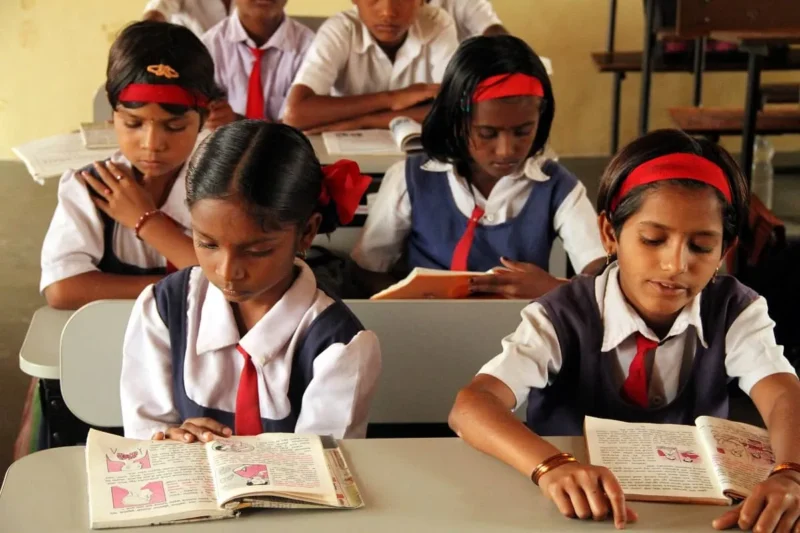
Asha (The Police Officer): Born into extreme poverty near Latur, Asha’s parents planned to pull her out of school after Class 10 to marry her off. A local CRY adolescent girls’ collective (Kishori Mandal) intervened, educated the family on the legalities and health risks, and kept her enrolled. Asha went on to complete her education and recently became the first-ever woman police officer from her village.
Your Financial Support is an Investment, Not an Expense
When you contribute to CRY, you aren’t simply giving a handout to patch over a temporary emergency. You are funding the salary of a grassroots worker who prevents child trafficking, providing nutrient packages to an expectant mother to halt stunting, and setting up digital STEM learning labs for rural girls.
Your donations change the trajectory of entire families, breaking generational loops of poverty.




Leave a Reply