




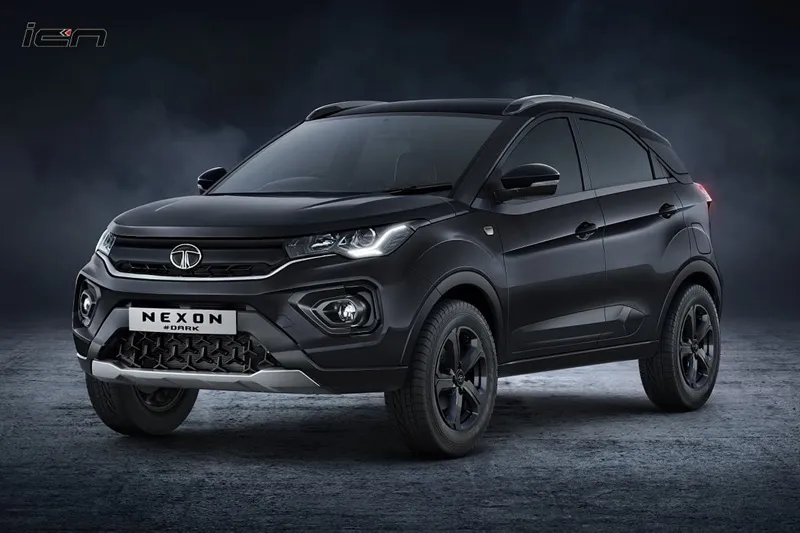
Let’s be real for a second—fuel prices in India aren’t getting any cheaper. If you’re a daily commuter, you’ve probably stared at the petrol pump meter ticking up and felt a little part of your soul (and wallet) die. For the longest time, the solution was buying a CNG car. But that came with a massive trade-off: you essentially had to say goodbye to your trunk space.
Well, Tata Motors decided to flip the script.
Enter the Tata Nexon iCNG. It’s the first turbocharged CNG SUV in India, and it solves the biggest headache of CNG ownership: the non-existent boot. But with all that new tech and the “SUV” tag, does it break the bank?
If you are hunting for the Tata Nexon CNG price, wondering which variant offers the best bang for your buck, or just want to know if it’s actually worth the hype, you’re in the right place. We’re going to break down the costs, the features, and the nitty-gritty details so you can decide if this is your next ride.
The Price Tag: What’s the Damage?
Tata hasn’t just slapped a CNG kit on a base model and called it a day. They’ve spread the CNG option across a massive range of variants, from the entry-level “Smart” to the fully loaded “Fearless” trims. This is great for choice but can be a nightmare for decision-making.
Here is the straightforward ex-showroom price list for the Nexon iCNG (prices are approximate estimates based on the latest 2025 data):
| Variant | Estimated Ex-Showroom Price |
| Smart (O) 1.2 iCNG | ₹ 8.99 Lakh |
| Smart + 1.2 iCNG | ₹ 9.69 Lakh |
| Smart + S 1.2 iCNG | ₹ 9.99 Lakh |
| Pure 1.2 iCNG | ₹ 10.69 Lakh |
| Pure S 1.2 iCNG | ₹ 10.99 Lakh |
| Creative 1.2 iCNG | ₹ 11.69 Lakh |
| Creative + 1.2 iCNG | ₹ 12.19 Lakh |
| Fearless + PS 1.2 iCNG | ₹ 14.59 Lakh |
Note: These are ex-showroom prices. Your final “on-road” price will include insurance, RTO registration, and other taxes, which usually adds another ₹1 Lakh to ₹1.5 Lakh depending on your state. For example, the top-end Fearless+ variant could touch ₹16.5 Lakh on-road in Delhi.
Why Is Everyone Talking About This “Twin Cylinder” Tech?
If you take nothing else away from this article, remember this: Twin Cylinder Technology.
In traditional CNG cars, a massive cylinder hogs the entire boot. You’re lucky if you can fit a laptop bag back there. Tata changed the game by using two smaller cylinders and tucking them underneath the boot floor.
The result? You get about 321 liters of usable boot space. That is enough for a weekend trip’s worth of luggage. You literally get to have your cake (savings on fuel) and eat it too (space for your bags).
Under the Hood: Is It Underpowered?
This is the second biggest fear with CNG cars—that they feel sluggish. You step on the gas, and… nothing happens.
Tata tackled this by using a 1.2L Turbocharged Revotron Engine. Yes, a turbo in a CNG.
-
Power: ~100 PS (99 bhp)
-
Torque: 170 Nm
To put that in perspective, this car doesn’t feel like a compromise. It’s peppy, it handles city traffic easily, and you won’t be gasping for power when you try to overtake a truck on the highway. Plus, it starts directly in CNG mode, so you don’t have to do that awkward “drive on petrol for 2km” ritual.
Which Variant Should You Buy?
With so many options, picking one is tricky. Here is my take:
-
The Budget Pick (Smart + S): If you want the savings and the sunroof (yes, Indians love sunroofs) without spending a fortune, this is the sweet spot at around ₹9.99 Lakh.
-
The Value King (Pure S): For about ₹1 Lakh more, you get better tech and comfort features that make daily driving significantly better.
-
The “I Want It All” (Fearless + PS): If you have the budget, this variant is loaded. We’re talking ventilated seats (a lifesaver in Indian summers), a 360-degree camera, and that fancy 10.25-inch digital instrument cluster. It’s basically a luxury car that runs on cheap fuel.
Key Takeaways
-
Starts at ₹8.99 Lakh: Very competitive entry point.
-
Real Boot Space: The twin-cylinder tech is a legit game-changer.
-
Performance: First turbo CNG in the segment means no “laggy” feel.
-
Safety: 5-Star Global NCAP rating with 6 airbags standard across all variants.
-
Mileage: ARAI claims 24 km/kg, which is fantastic for a heavy SUV.
Comparison: Nexon CNG vs. The Rivals
The biggest competitor here is the Maruti Brezza CNG.
-
The Brezza is known for incredible reliability and slightly better mileage.
-
The Nexon wins on power (Turbo engine), boot space (Twin Cylinder), and premium features (Ventilated seats, fancy screens).
If you are a mileage-first buyer, Brezza might still tempt you. But if you want a car that feels premium and fun to drive, the Nexon takes the trophy.
FAQ: Your Questions Answered
1. What is the real-world mileage of the Tata Nexon CNG?
While the ARAI claimed figure is 24 km/kg, real-world driving usually sees figures around 16-19 km/kg in city traffic and 22+ km/kg on highways, depending on your driving style.
2. Can I fit luggage in the Tata Nexon CNG boot?
Absolutely. Thanks to the twin-cylinder technology, you get 321 liters of boot space. It’s almost as good as the petrol version, meaning you can easily fit 2-3 medium-sized suitcases.
3. Does the Nexon CNG come with an automatic transmission?
As of now, the Nexon CNG is only available with a 6-speed Manual Transmission (MT). There is no AMT or DCA option for the CNG variants yet.
4. Is the Nexon CNG safe?
Yes, it is one of the safest cars in India. It boasts a 5-star Global NCAP rating and comes with 6 airbags, ESP, and a micro-switch that turns off the engine during refueling.
Conclusion
The Tata Nexon iCNG isn’t just a “cheaper to run” version of the Nexon; it’s a complete package. It addresses the two biggest complaints about CNG cars—lack of power and lack of space—and fixes them both.
Sure, the Tata Nexon CNG price for the top variants gets a little steep (crossing ₹14 Lakh ex-showroom), but you are getting a premium, safe, and feature-rich SUV that just happens to be light on your wallet at the fuel pump.
If you are tired of high petrol prices but refuse to drive a bare-bones tin can, the Nexon CNG is likely the upgrade you’ve been waiting for.





Leave a Reply