




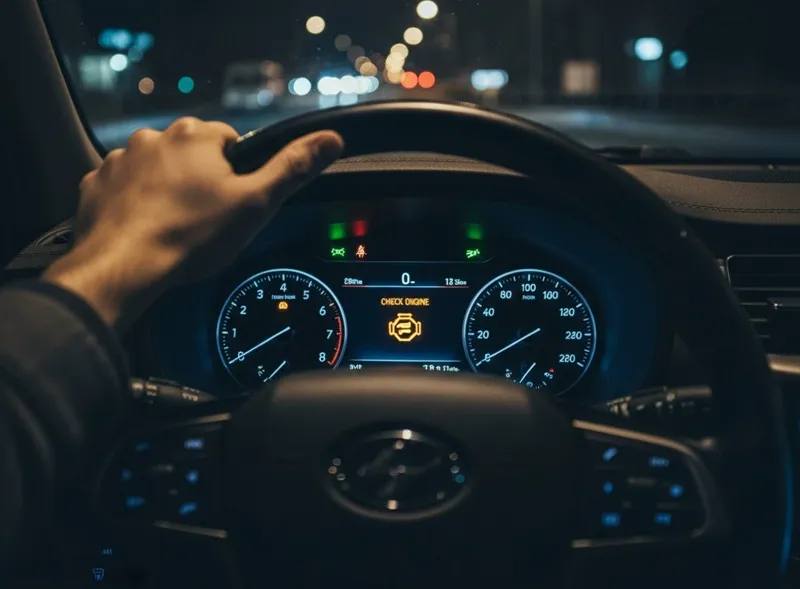
We’ve all been there. You’re cruising down the highway, your favorite song is playing, and then it happens. Out of the corner of your eye, you spot that dreaded amber glow: the check engine light.
Your mind immediately starts racing. Is the engine about to explode? How much is this going to cost me? Can I make it to work?
Take a deep breath. While that light is definitely an “uninvited guest” on your dashboard, it isn’t always a signal of financial doom. It’s simply your car’s way of saying, “Hey, something isn’t quite right in the system, and we should probably talk about it.”
In this guide, we’re going to break down what that light actually means, the difference between a steady and a flashing light, and how to find a reliable “mechanic for check engine light” near you.
Key Takeaways
- Steady Light: Something is wrong, but it’s likely not an immediate emergency. Schedule an appointment soon.
- Flashing Light: This is a “Stop Now” emergency. Your engine is misfiring and could suffer permanent damage.
- The “Gas Cap” Trick: Before spending money, ensure your gas cap is tight and clicking.
- Codes vs. Fixes: Clearing a code is not the same as fixing the problem.
What Does the Check Engine Light Mean, Anyway?
Technically known as the Malfunction Indicator Lamp (MIL), this light is part of your car’s onboard diagnostics system (OBD-II). Since the mid-90s, every car sold in the US has a computer that monitors everything from engine speed to the chemical makeup of your exhaust.
When a sensor detects something outside of the “normal” range, it logs a “trouble code” and triggers the light. It’s basically a digital breadcrumb trail for a mechanic to follow.
The Two Versions of the Light
- Steady Glow: This is the most common. It means there’s a persistent issue that needs attention. It could be something minor like a faulty sensor or something more significant like a failing part.
- The Flashing Light: If your check engine light is flashing, stop driving immediately. This usually indicates a severe engine misfire. If you keep driving, you risk dumping unburned fuel into the exhaust, which can melt your catalytic converter—a repair that can easily top $2,000.
Why Is My Check Engine Light On? (The Usual Suspects)

Modern engines are complex, but most check engine lights boil down to a few common culprits.
| Problem | Severity | Estimated Repair Cost |
|---|---|---|
| Loose Gas Cap | Very Low | $0 – $30 |
| Faulty Oxygen (O2) Sensor | Moderate | $150 – $350 |
| Worn Spark Plugs/Wires | Moderate | $100 – $300 |
| Mass Airflow Sensor (MAF) | Moderate | $200 – $400 |
| Catalytic Converter | High | $1,000 – $2,500 |
1. The Loose Gas Cap
Believe it or not, this is one of the most common reasons for the light. Your car’s fuel system is pressurized. If the cap is loose, cracked, or missing, the sensors think there’s a leak in the evaporative emissions system. Try tightening it until it clicks. If that was the issue, the light might take a day or two of driving to turn itself off.
2. Failing Oxygen (O2) Sensor
This sensor measures how much unburned oxygen is in the exhaust. If it’s gunked up or broken, your car doesn’t know how much fuel to use. You’ll notice your gas mileage taking a massive hit, and eventually, it can ruin your catalytic converter.
3. Worn Out Spark Plugs
If your car feels “stuttery” or jerky when you accelerate, your spark plugs might be reaching the end of their life. This is basic maintenance, but ignoring it leads to engine misfires—which leads back to that scary flashing light we talked about.
How to Clear the Codes (and Why You Probably Shouldn’t)
If you search for “how to clear check engine light” or “how to reset check engine light,” you’ll find plenty of videos telling you to disconnect the battery or use a cheap $20 scanner.
Yes, you can clear the codes. But here’s the catch: Clearing the code does not fix the problem.
If the sensor is still broken, the computer will simply detect the error again and the light will come back on—usually within 50 miles. Even worse, if you’re trying to clear the light to pass an emissions test, it won’t work. The “readiness monitors” in your car’s computer will show as “Not Ready,” and you’ll fail the test automatically.
How to clear the codes properly:
- Plug an OBD-II scanner into the port (usually under the dash).
- Read the code (e.g., P0420).
- Fix the mechanical part associated with that code.
- Use the scanner to clear the code and perform a “drive cycle” to ensure the light stays off.
Finding a “Mechanic for Check Engine Light Near Me”
When you’re ready to get it checked out, you want someone who doesn’t just “parts cannon” your car—throwing expensive parts at the problem until it goes away. You need a diagnostic specialist.
What to look for in a shop:
- ASE Certification: Look for the blue seal. It means the technician has been tested on their diagnostic skills.
- Modern Equipment: Ask if they use advanced diagnostic tablets. Old-school “code readers” aren’t enough for modern luxury cars or EVs.
- Transparent Pricing: A good shop will charge a “diagnostic fee” (usually $100-$150). This pays for the technician’s time and expertise to find the root cause so you don’t pay for unnecessary repairs.
FAQ: What People Also Ask
Can I drive with my check engine light on?
If it’s steady and the car feels normal, you can usually drive it home or to a shop. However, don’t ignore it for weeks. Small problems (like an O2 sensor) quickly turn into big problems (like a melted catalytic converter) if left alone.
How much does it cost to get the light checked?
Many chain auto parts stores will “read” your codes for free. This is a great starting point, but remember: a code reader tells you where the pain is, not why it’s happening. A professional mechanic will charge a diagnostic fee to find the actual solution.
Will the check engine light turn itself off?
If the problem was temporary (like a loose gas cap you tightened), the light will usually turn off after 3 to 5 “drive cycles” (trips where the engine reaches full operating temperature).
Does a check engine light mean I need an oil change?
Usually, no. Most cars have a separate “Maintenance Required” or “Oil Life” light. The check engine light is reserved for the emissions and engine management systems.
The Bottom Line
A check engine light is an annoyance, but it’s also a helpful warning system designed to save your engine from total failure. If you see that amber glow, check your gas cap first. If it stays on, don’t wait.
Find a trusted local mechanic, get a professional diagnostic scan, and handle the repair while it’s still a small, affordable fix. Your car (and your wallet) will thank you in the long run.





Leave a Reply