




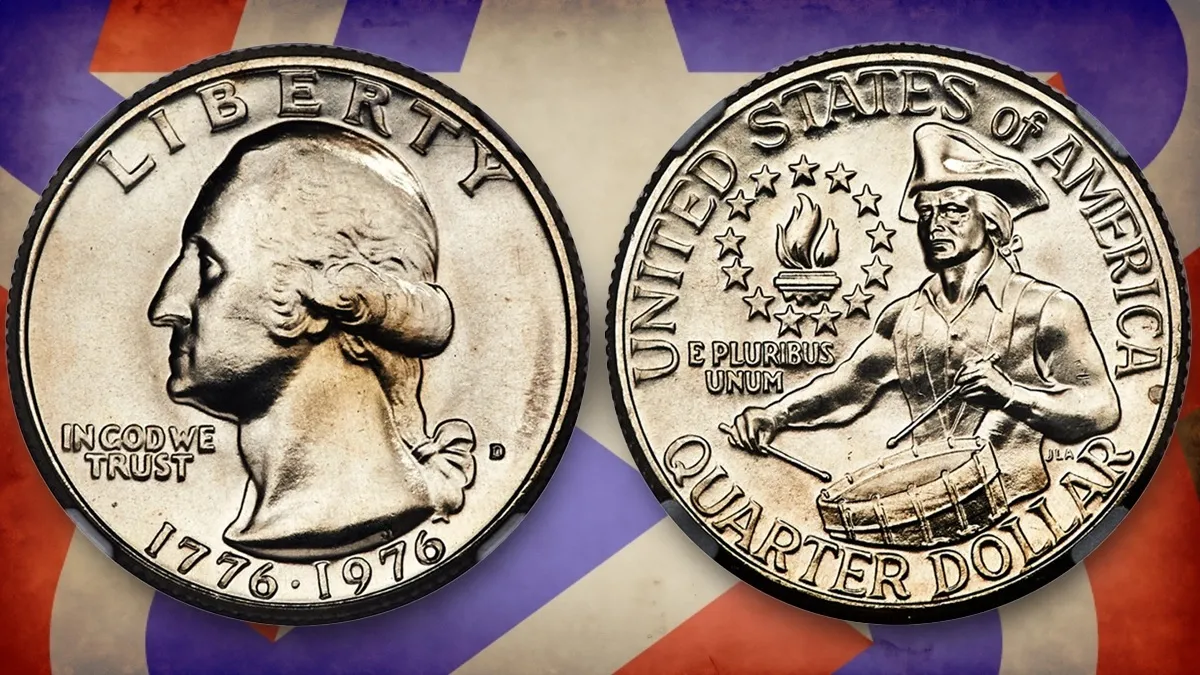
The United States Bicentennial Coinage is one of the most memorable issues in modern U.S. coin history. Released in 1975 and 1976, these coins celebrated the 200th anniversary of the signing of the Declaration of Independence. They were more than currency. They were a tribute to the nation’s history, freedom, and progress. Today, collectors and history lovers still value them for their design, symbolism, and unique place in American culture.
A Tribute to the Nation’s 200 Years
In the early 1970s, the United States Mint began planning how to mark the country’s 200th birthday. The idea was to create coins that would circulate nationwide while reminding people of the nation’s journey since 1776. To make this possible, Congress approved a special set of designs for the quarter, half dollar, and dollar coins.
These coins were different from regular ones. They featured the dual date “1776–1976,” showing that they were minted in honour of the Bicentennial. Each coin also had a new reverse design that reflected themes of liberty and heritage. The designs were chosen through public competitions, which gave artists across the country a chance to contribute to this historic project.
The Designs That Made History
The Bicentennial quarter featured a colonial drummer designed by Jack L. Ahr. The image captured the spirit of the American Revolution and became one of the most iconic coin designs ever made. The half dollar, designed by Seth G. Huntington, showed Independence Hall, where the Declaration of Independence was signed. It served as a powerful reminder of the building’s role in shaping the nation’s founding principles.
Dennis R Williams designed the dollar coin. It had an interesting motif. It showed the Liberty Bell in front of the Moon. An interesting mixture of space achievements and history. It was simple, but very powerful.
Special Minting and Materials
The United States Mint produced Bicentennial coins in both regular circulation versions and collector editions. Most of the coins were struck in copper-nickel, but the Mint also released limited editions in 40% silver for collectors. These silver sets, sold in special packaging, are now among the most sought-after pieces of the Bicentennial collection.
Each coin was marked with the dual date instead of the usual single year of mintage. That small detail set them apart and made them instantly recognisable. Because they were produced over two years, no quarters, half dollars, or dollar coins bore the date 1975. Every coin from that time instead showed “1776–1976.”
Why They’re Still Valuable Today
The value of Bicentennial coins depends on their condition, rarity, and composition. Circulated coins found in loose change usually hold sentimental rather than monetary value. However, uncirculated or proof coins, especially those made of silver, can fetch much higher prices among collectors.
Proof sets, which were sold directly by the Mint, are especially prized. Their polished finish and sharp details make them stand out. Many collectors also seek coins with mint errors or unique toning, both of which can significantly increase their value. The financial aspect of these coins is sound. But they are far more than that. They represent history and achievements in one go. They remind people of national pride and unity during the 1976 celebrations.
A Popular Choice for New Collectors
For many people who start coin collecting, Bicentennial coins are an easy and affordable entry point. They are widely available, visually striking, and carry strong historical significance. Because millions were produced, most examples are still within reach for beginners. Yet, their designs and meaning give them lasting appeal even to seasoned collectors.
Silver Bicentennial sets have grown in value over the years. They were made in limited numbers, which makes them rare today. As silver prices go up, their worth can increase too. Collectors who keep these coins in their original boxes often find that the value rises with time.
A Lasting Symbol of American Spirit
Few coin issues have had the same cultural impact as the Bicentennial series. They were not created for profit or politics but for celebration. They reflected pride in the nation’s journey and optimism about its future. Every detail—from the drummer boy to the Liberty Bell and Moon—carried meaning.
Even today, spotting a 1776–1976 quarter in circulation can bring back a sense of nostalgia. It is a small piece of history that still connects people to a larger story.
How to Identify and Care for Them
If you have Bicentennial coins, it’s easy to tell what you own. Look for the “1776–1976” date and the special reverse design. If your coin has a mirror-like surface, it might be a proof. Silver versions are slightly heavier and often have a duller ring when dropped gently on a surface compared to regular copper-nickel coins.
To preserve them, avoid polishing or cleaning, as that can lower their value. Store them in a dry place using coin holders or plastic capsules to prevent scratches. Collectors often use acid-free folders or albums to keep their coins organised and protected.





Leave a Reply